Chasing a 454 tok/s tweet: a day of tuning Qwen3.8-27B on the RTX PRO 6000
Aug 22, 2026
We tried to reproduce a viral single-GPU benchmark on our production box. We got 335, found out why the last 120 tok/s is physically locked out on Server Edition cards, and walked away with a +12% win we actually shipped.
A tweet claimed 454 tok/s from Qwen3.8-27B on a single RTX 6000: NVFP4 W4A4 weights, SGLang with a DFlash2 block-16 drafter, FP8 KV cache, and a +6000 memory overclock. We run that exact model on eight RTX PRO 6000s behind our load balancer, so the obvious question was: do we get that number too?
Short answer: no — and the reasons why turned into the most useful benchmarking day we've had on this box. Traffic was light, so we borrowed six of the eight GPUs, ran six waves of guarded benchmark sweeps, and put everything back before dinner.
What we ran
Every config is the same target (Qwen3.8-27B NVFP4) and the same block-diffusion draft model, one variable at a time: draft block size (8/10/12/14/16), KV cache dtype (bf16 vs FP8, target and draft pools independently), attention backends, torch.compile, and SGLang's acceptance knobs. Fifteen measured cells per config, plus long-context decode probes at 82K tokens and c1/c4/c8 concurrency checks. All of it under our thermal guard, with production single-homed on the two remaining GPUs the whole time.
What worked
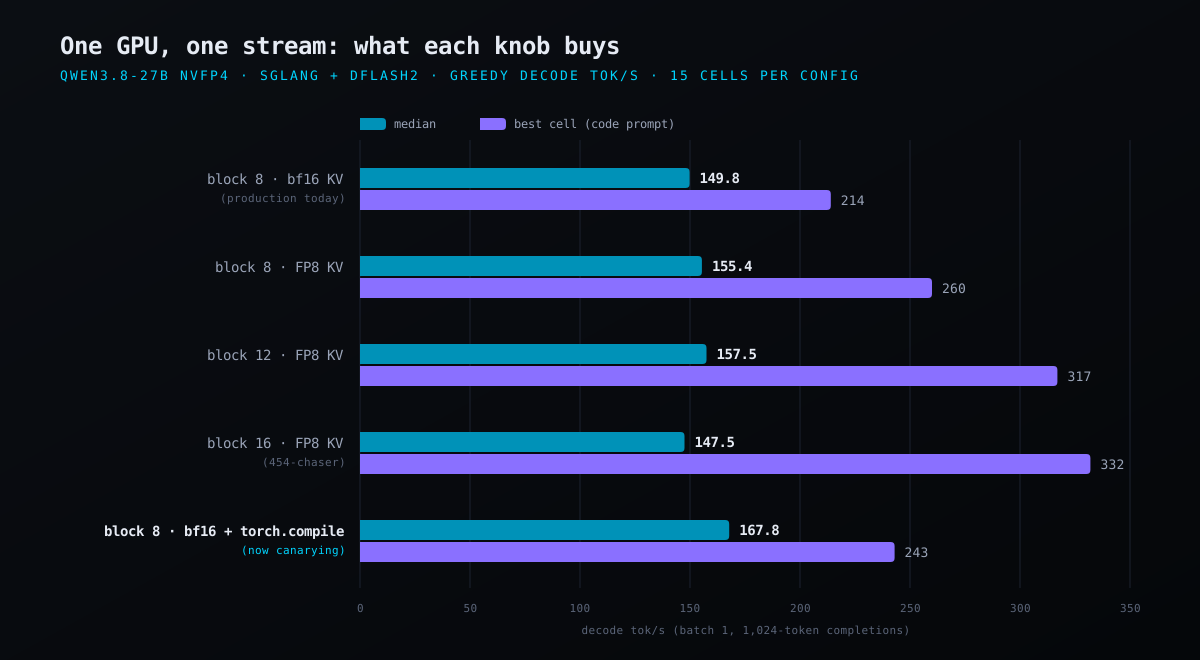
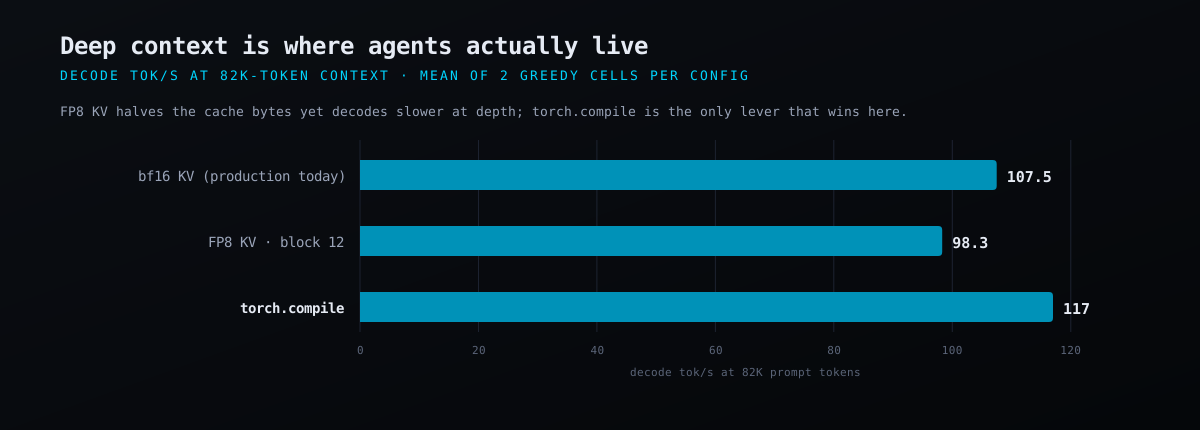
torch.compile. The boring flag won. --enable-torch-compile lifted the production config's median from 149.8 to 167.8 tok/s (+12%) with zero change to outputs — same weights, same KV precision, same speculation. It's also the only knob that helped at depth, and depth is where coding agents actually spend their lives:
It costs you at startup: ~8 minutes to compile cold (~4 with a warm cache), and two of our six launches failed CUDA graph capture on the first try until we pinned --mem-fraction-static 0.85. We're canarying it on one production engine now.
Bigger draft blocks — but only for the highlight reel. Running the block-8-trained drafter at 12 or 16 draft tokens pushes the best-case code cell from 214 to 332 tok/s. But the median barely moves and the prose cells get slower, because acceptance drops and you're paying to verify drafts that get thrown away. Fun number, wrong default.
What didn't
FP8 KV cache is a memory feature, not a speed feature. It halves the KV pool (644K tokens of cache per GPU, which is real headroom), but on speed it's a wash at short context and a ~9% loss at 82K. The dtype nudges the target's numerics just enough to move borderline draft acceptance, and on this hybrid-attention model the halved cache bytes never show up as decode speed.
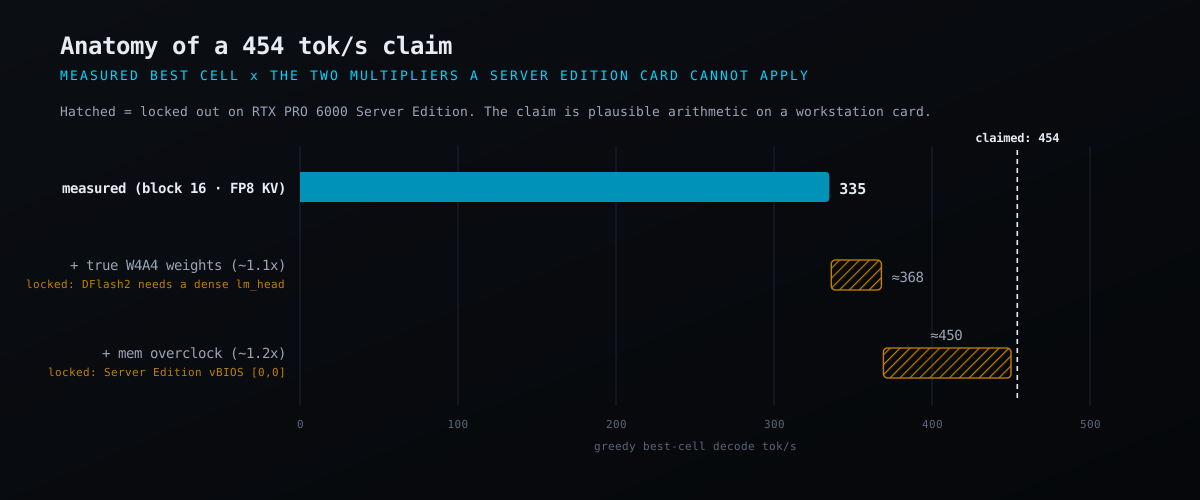
The overclock is physically off the table. This was the day's biggest surprise. Our cards are the RTX PRO 6000 Server Edition, and its vBIOS reports an admissible memory-clock offset range of exactly [0, 0] — at every performance state. The NVML call doesn't fail; the hardware just permits a zero-width range. The tweet's card is the workstation SKU, where +6000 on GDDR7 is routine.
The "W4A4" part doesn't run here either. The true W4A4 export quantizes the lm_head, and DFlash2's candidate selector computes draft candidates through the target's lm_head — it hard-requires a dense one. So we serve the export that keeps lm_head dense, which carries ~10% more weight bytes per decode step.
Assorted dead ends: adaptive speculation isn't implemented for DFlash2 in our SGLang pin (it logs a fallback and does nothing), relaxed acceptance thresholds buy ~4% at a real quality cost, and both flashinfer backend switches were pure noise.
So where does 454 come from?
Multiply it out: our measured 335 best cell, times ~1.1 for the smaller W4A4 weights, times ~1.2 for the memory overclock — that's ≈450. The claim is honest arithmetic on a workstation card. It's just built from a best-case greedy code prompt (the same config's median here is ~149), plus two multipliers a Server Edition card cannot apply.
If you run RTX PRO 6000 Server Edition
Four things we'd tell anyone serving LLMs on these cards:
- Know which SKU you have before you budget for tuning. Server Edition locks clock offsets in vBIOS. Every "+X memory OC" number on your timeline is from the workstation card.
- Turn on
torch.compile. +12% median and +10–15% at long context for one flag. Pin your mem fraction, expect the slow first start, and roll one engine at a time. - Read speculative decoding claims as medians, not maxes. Draft acceptance swings 2× between code and prose. A single quoted number is almost always the best cell.
- Use FP8 KV for capacity, not speed. If you need more concurrent contexts per GPU, it doubles them. If you're chasing tok/s, it won't get you any — and costs a little at depth.
The meta-lesson is older than this GPU: the config that produces the screenshot number and the config you want in production are usually different configs. We got a genuine +12% out of chasing someone else's 454 — that's a good trade.